

Hail Damage Roof Claim in Texas: A Step-by-Step Guide
Texas hail season runs from May through July, and if you live in the DFW area or Ellis County, you already know what that means. One afternoon storm can drop golf ball-sized hail across an entire neighborhood, and by the time it moves on, hundreds of roofs have sustained damage that most homeowners can't see from the ground.
The problem most people run into isn't the storm itself. It's what comes after. Filing a hail damage roof claim in Texas is a process that has specific deadlines, specific documentation requirements, and a few well-known traps that can cost you thousands if you're not prepared. Insurance companies handle thousands of storm claims every season, and their adjusters are experienced professionals. You need to walk into that process just as prepared as they are.
This guide walks you through every step of a hail damage roof claim in Texas, from the moment the storm passes to the day your new roof is complete. Whether you're in Waxahachie, Midlothian, Red Oak, or anywhere across the DFW area, the same process applies.
What Hail Actually Does to a Texas Roof
Before you can file a successful claim, you need to understand what you're documenting. Not all hail damage looks the same, and not all of it is visible from the ground. Insurance adjusters are trained to identify specific types of damage, and your claim will be evaluated against those criteria.
Granule loss is the most common form of hail damage on asphalt shingle roofs. Hail impacts knock protective granules off the surface of the shingle, exposing the asphalt mat underneath to UV radiation and moisture. From the ground, you might notice granules collecting in your gutters or at the base of your downspouts. On the roof itself, the impacts appear as dark, circular spots where the granule coating has been stripped away.
Bruising refers to soft spots in the shingle mat where hail impact has weakened the underlying structure without visibly cracking the surface. A trained inspector can feel these with light hand pressure. Left unaddressed, bruised shingles deteriorate faster and begin to fail prematurely, often well before a standard replacement timeline.
Cracked and broken shingles are more visible and indicate larger hail or a higher-impact storm event. Cracks compromise the waterproofing layer immediately and can lead to active leaks within one or two rain cycles.
Dented metal components include gutters, downspouts, metal flashing, ridge caps, and any skylights or ventilation components. Dents in these areas are important documentation because they establish the size and intensity of the hail event on your property. Insurance adjusters use this evidence to corroborate damage to shingles.
Damage to other surfaces on your property, including air conditioning units, window screens, wood fencing, and painted surfaces, can all support your claim by demonstrating the scope and severity of the storm.
One critical point: hail damage is not always immediately visible, and its full effects often don't show up as active leaks until months later. That's why a professional inspection within a few days of a storm is so important, even if your home appears undamaged from the street.
Step 1: Document Everything Before You Touch Anything
The window between a storm and your insurance inspection is one of the most important periods in the entire claim process. What you do, and what you don't do, during this time directly affects your payout.
Your first priority is documentation. Take photos and video of every affected surface you can safely access from the ground. Capture your gutters, downspouts, window screens, AC unit, wood fence, and any other exterior surfaces that may show visible impact marks. Don't get on the roof yourself. Beyond the safety risk, an untrained eye can miss or misinterpret what needs to be documented, and disturbing the damage before the adjuster sees it can create complications.
Note the date and time of the storm. Pull local weather data from a service like the National Weather Service or a weather tracking app to confirm hail size and storm path in your specific zip code. This data becomes part of your claim documentation.
If you have any existing photos of your roof from before the storm, find them. Before and after documentation is valuable, but it's also something your insurer may use to argue that existing wear and tear predates the storm. Having a clean record of your roof's pre-storm condition strengthens your position.
Step 2: Schedule a Professional Roof Inspection Right Away

Texas insurance policies typically include a one-year deadline from the date of loss to file a claim. That sounds like plenty of time, but the practical reality is different. Waiting weeks or months to get an inspection creates two problems: the damage continues to worsen through additional rain and UV exposure, and it becomes harder to prove the damage was caused by the specific storm rather than gradual wear.
A professional inspection from a licensed Texas roofing contractor serves a purpose that an insurance adjuster's visit does not. The contractor is working for you, not the insurance company. Their job is to identify and document every point of damage so that nothing is missed or undervalued when the adjuster arrives.
A thorough inspection from Red Phoenix Roofing covers your entire roofing system, including shingles, flashing, ridge caps, valleys, gutters, fascia, soffit, and all penetrations. We provide a detailed written report with photo documentation that you can submit directly to your insurer. This report establishes a complete picture of the damage and serves as an independent assessment that carries weight throughout the claims process.
Free inspections are standard in the industry following a major storm event. If a roofer is charging you for a storm inspection, that's a red flag. Red Phoenix provides free roof inspections for all Ellis County and DFW area homeowners.
Step 3: File Your Claim Promptly
Once you have your inspection report and documentation in hand, contact your insurance company to open the claim. Most major carriers now allow you to start a claim online or through an app. Have the following ready:
Your policy number. The date of the storm. The weather documentation you pulled in Step 1. Your contractor's inspection report and photos. A list of all damaged exterior components beyond just the roof.
When you file, request a copy of your policy's storm and hail damage provisions in writing. Ask specifically about your Actual Cash Value versus Replacement Cost Value coverage, your wind and hail deductible (which in Texas is often a percentage of your home's insured value rather than a flat dollar amount), and any exclusions that apply to your specific policy.
This is also the right time to ask your roofing contractor if they offer assistance navigating the claims process. At Red Phoenix Roofing, we work alongside homeowners throughout the insurance process. We don't file claims on your behalf, which would be illegal under Texas law, but we attend adjuster meetings, answer technical questions, and make sure the damage assessment reflects the actual scope of work required.
Step 4: The Insurance Adjuster Visit
Your insurer will schedule an adjuster to inspect your property. This visit is one of the most consequential steps in the entire process, and it pays to be prepared.
Have your contractor's inspection report ready to share with the adjuster. You have every right to have your roofing contractor present during the adjuster visit, and doing so is strongly advisable. A trained roofer can point out specific damage that adjusters sometimes miss, ask clarifying questions about how items are being assessed, and ensure that the adjuster's scope of damage aligns with the independent inspection.
Pay attention to what the adjuster documents versus what your contractor identified. If items are missed or categorized differently, you'll want to know that in real time rather than after the estimate is issued.
Be polite and cooperative throughout the inspection. Document the adjuster's name, company, and contact information. Ask when you can expect the estimate and how disputes are handled if you believe the assessment is incomplete.
Step 5: Review the Adjuster's Estimate Carefully
Once the adjuster's estimate arrives, don't sign off on it immediately. This document determines your payout, and it's worth reviewing line by line with your contractor before you accept it.
The estimate will typically use a software system called Xactimate, which is an industry-standard pricing tool. Your contractor should be familiar with Xactimate and can review whether the line items reflect actual local labor and material costs. Discrepancies between the adjuster's estimate and your contractor's bid are common and often negotiable.
Key areas to scrutinize include: whether the estimate covers full replacement or only repair, whether code upgrade requirements are included (Texas building codes may require updates to your roofing system during a replacement), and whether all damaged components beyond the primary roof surface are addressed.
If the estimate falls short of what the work actually requires, your contractor can submit a supplemental claim with supporting documentation. This is a normal part of the process and not a confrontational action. Insurance companies expect supplemental requests on larger storm claims.
Step 6: Understanding Your Texas Hail Deductible
Texas homeowners need to pay particular attention to the wind and hail deductible in their policy. Following widespread storm losses in North Texas over the past decade, many insurers moved to percentage-based deductibles for wind and hail claims specifically. This means your out-of-pocket cost is calculated as a percentage of your home's insured replacement value, not a flat dollar amount.
On a home insured for $300,000 with a two percent wind and hail deductible, your deductible is $6,000. That's money you pay before the insurance payout covers the rest. Understanding this number before your contractor begins work is essential so you can plan accordingly.
Be cautious of any contractor who offers to waive your deductible. This practice is illegal in Texas under the Insurance Code. Contractors who offer this arrangement are either inflating the claim amount to cover the deductible, which constitutes insurance fraud, or absorbing the cost themselves, which raises serious questions about how they're managing the job. Either way, it creates legal exposure for the homeowner.
Step 7: Choosing the Right Contractor for Your Roof Replacement
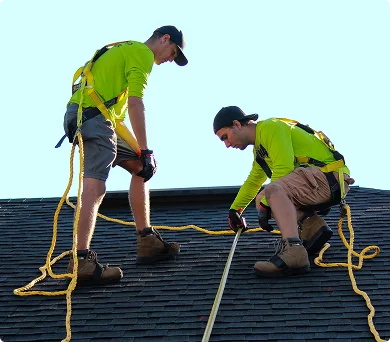
A hail damage insurance payout is not a blank check. Your insurer is paying for a specific scope of work based on documented damage, and your contractor needs to execute that scope accurately and completely.
In Texas, roofing contractors are not required to hold a state-issued license. That means anyone can operate as a roofer, and storm seasons attract out-of-state contractors, often called storm chasers, who move through affected areas quickly and disappear before callbacks arise. These contractors may offer fast turnarounds at attractive prices, but they're typically not available when issues arise six months later.
When evaluating contractors after a hail event, verify that they hold active general liability and workers' compensation insurance. Check their Google reviews and look specifically for mentions of insurance claim work. Ask how long they've been operating in the area and where their office is located. Confirm they're registered with the Texas Secretary of State as a business entity.
Red Phoenix Roofing is GAF Master Elite Certified, a distinction held by fewer than two percent of roofing contractors nationwide. Our team is fully insured, locally operated out of Waxahachie, and has deep experience working through the insurance claims process with Ellis County and DFW homeowners. We've helped hundreds of families get the full value of their hail damage claims while delivering roofing systems built to handle the next storm.
Step 8: The Replacement Cost Value Release
If your policy covers Replacement Cost Value rather than Actual Cash Value, your payout happens in two stages. The first payment, called the Actual Cash Value payment, is released when the claim is approved. This payment is the estimated replacement cost minus depreciation.
Once your roof replacement is complete, you submit proof of completion to your insurer and the depreciation amount is released as the second payment. This final payment is called the Recoverable Depreciation or the RCV holdback, and it can represent a significant portion of the total claim value. Many homeowners don't know to request it, and some policies have time limits on how long you have to claim it.
Your contractor should walk you through this process and remind you to submit your completion documentation as soon as the job is finished.
Common Mistakes That Cost Texas Homeowners Money
After working through hundreds of insurance claims across Ellis County and the DFW area, the team at Red Phoenix sees the same avoidable mistakes repeatedly. Here are the ones that matter most.
Waiting too long to inspect. Damage that worsens between the storm and the adjuster visit can be attributed to neglect rather than storm damage. Get an inspection within a week of the storm.
Skipping the contractor at the adjuster meeting. Having your roofer present during the adjuster inspection consistently results in more complete damage assessments. This is free to do and takes less than an hour.
Accepting the first estimate without review. Initial adjuster estimates are rarely the final word. Review the line items with your contractor and submit a supplement if the scope is incomplete.
Choosing a contractor based on price alone. The contractor you select after a hail event is responsible for one of your home's most important protective systems. A low-bid contractor who cuts corners will cost you more in repairs within two to three years.
Missing the depreciation recovery. If you have RCV coverage, don't forget to submit completion documentation and claim your recoverable depreciation. That money is owed to you under your policy.
Red Phoenix Roofing Is Your Partner Through the Entire Process
Navigating a hail damage roof claim in Texas is genuinely complicated, but you don't have to do it alone. The Red Phoenix Roofing team serves Waxahachie, Midlothian, Red Oak, Ennis, Mansfield, and communities across Ellis County and South DFW. We've been through this process with hundreds of local families, and we know every step from the first inspection to the final payment.
We offer free roof inspections with no obligation, attend adjuster meetings at your request, review insurance estimates before you sign, and handle your replacement with the GAF Master Elite quality and installation standards that back warranties up to 25 years. Our crews live in these same neighborhoods, and our reputation is built on doing this work the right way.
If your home was hit by a recent storm, don't wait. The sooner you get an inspection, the stronger your claim will be. Request your Free Roof Inspection Today
Call us at 214-444-7772 Red Phoenix Roofing | 1348 U.S. 287 Bypass Suite 200, Waxahachie, TX 75165
Frequently Asked Questions: Hail Damage Roof Claims in Texas
How long do I have to file a hail damage roof claim in Texas?
Texas insurance policies generally allow one year from the date of loss to file a claim for hail damage. Some policies may have different provisions, so review your policy or contact your agent immediately after a storm.
Will filing a hail damage claim raise my homeowners insurance premium?
A single storm-related claim typically has less impact on your premium than a non-weather claim. However, multiple claims in a short period can affect your rates or renewability. Consult your agent about your specific policy before filing if you're concerned about this.
What is a wind and hail deductible in Texas?
Many Texas policies now use a separate, percentage-based deductible for wind and hail claims. This deductible is calculated as a percentage of your home's insured replacement value, typically between one and two percent, rather than a flat dollar amount.
Can my insurance company deny a hail damage claim?
Yes. Common reasons for denial include damage determined to be pre-existing wear and tear, insufficient documentation, filing outside the policy deadline, or damage that falls below the deductible threshold. A professional inspection report from your contractor provides important documentation that supports your claim.
What is the difference between ACV and RCV coverage?
Actual Cash Value (ACV) coverage pays the replacement cost of your roof minus depreciation for its age and condition. Replacement Cost Value (RCV) coverage pays the full cost of replacement. With RCV coverage, the depreciation amount is held back until work is complete, then released as a second payment.
What should I do if my insurance claim is denied or underpaid?
You have the right to dispute an insurance decision through a formal appeals process. You may also request a re-inspection or hire a licensed public adjuster to independently assess the damage. Your roofing contractor can also submit supplemental documentation to support an appeal.
Red Phoenix Roofing is a GAF Master Elite Certified roofing contractor serving Waxahachie, Midlothian, Red Oak, Ennis, Mansfield, and communities across Ellis County and South DFW. We specialize in residential roof replacement, storm damage restoration, and insurance claim support for Texas homeowners.