
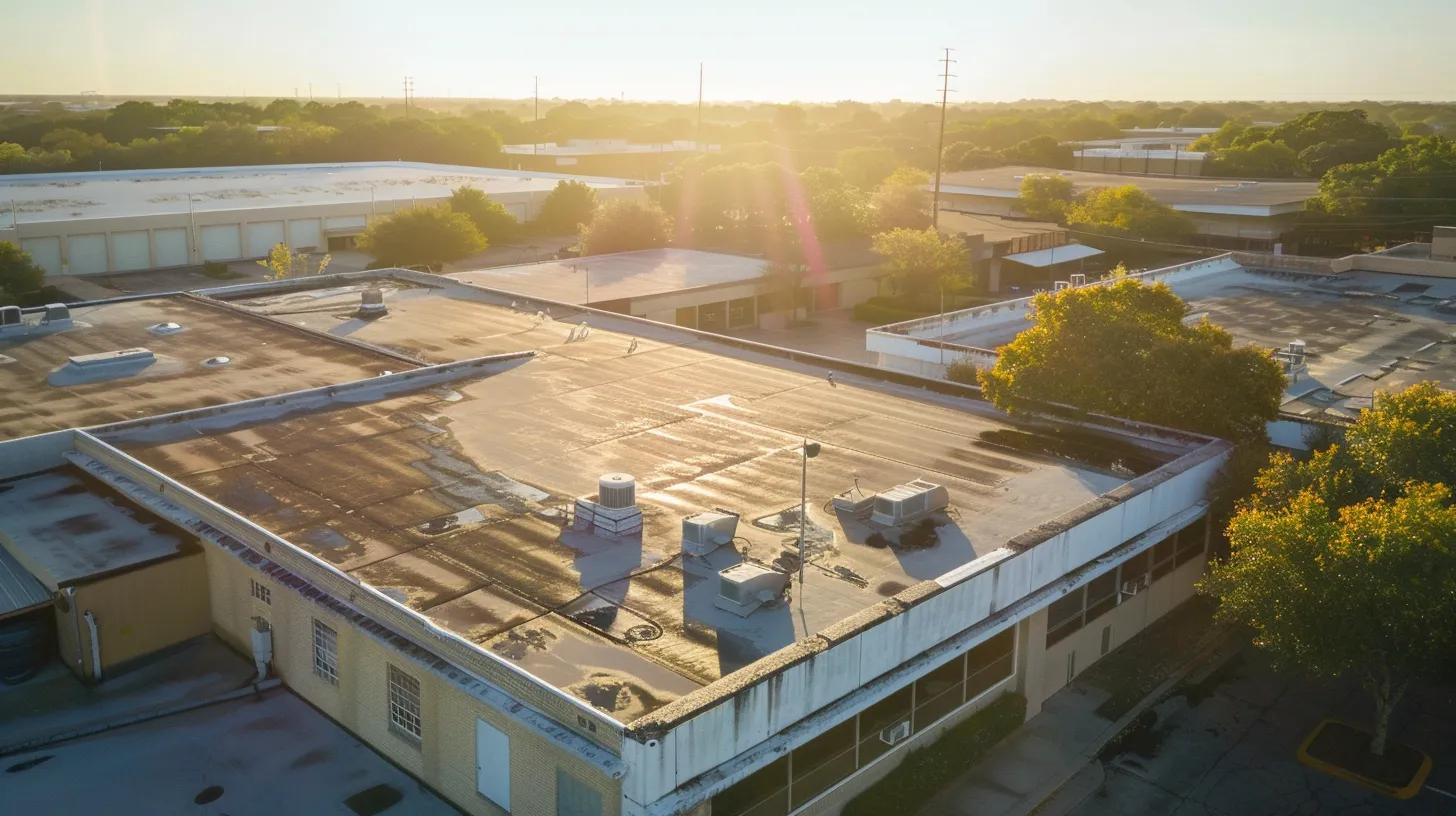
Signs Your Midlothian Commercial Roof Needs Repair Before It Becomes a Replacement
Midlothian's commercial corridor has grown steadily over the past decade, and with that growth has come a significant inventory of commercial buildings ranging from light industrial facilities and retail centers to office parks and warehouses along Highway 287. Many of those buildings are carrying roofs that were installed during the buildout years and are now entering the age range where small problems quietly become expensive ones.
For Midlothian business owners and property managers, the difference between a $3,000 repair and a $40,000 replacement often comes down to one thing: how early the warning signs were caught. Commercial roofs communicate clearly when something is wrong. Most property owners simply aren't sure what to look for or how to interpret what they're seeing.
Red Phoenix Roofing provides commercial roof repair and inspection services across Midlothian and Ellis County. This guide covers the signs that should put a commercial roof at the top of your maintenance list, the factors that determine whether repair or replacement is the right call, and what the repair process looks like when it is handled correctly.
Why Commercial Roof Problems Escalate Faster Than Most Owners Expect
Commercial roofs are out of sight for most of the workday. Unlike a residential roof that a homeowner passes by and looks at regularly, a flat or low-slope commercial roof is typically not visible from the ground and not something most business owners or tenants think about until water starts coming through the ceiling.
That invisibility is what allows small issues to grow into serious ones. A membrane seam that has started to lift, a drain that is collecting debris and holding water, or a flashing edge that has pulled away from a parapet wall are all problems that a trained eye catches on a routine inspection. Left unaddressed, each of those conditions progresses into moisture intrusion, deck deterioration, and ultimately a scope of damage that has moved well beyond repair territory.
The National Roofing Contractors Association recommends professional commercial roof inspections at least twice per year, plus after any significant storm event. In Ellis County and across the DFW area, where storm seasons run from spring through early summer and hail is a recurring risk, that post-storm inspection is especially important for Midlothian commercial properties.
Warning Signs That Demand Immediate Attention
The following signs indicate active or imminent failure in a commercial roofing system. Any one of them warrants a professional inspection before the next rain event.
Standing water after rainfall. Low-slope and flat commercial roofs are designed to drain within 48 hours of rainfall. Water that remains pooled longer than that indicates a drainage failure, a low spot in the roof deck, or both. Ponding water accelerates membrane degradation, adds structural load to the roof deck, and creates conditions for biological growth that further compromises the system.
Interior water stains or active leaks. Water staining on ceiling tiles, walls, or near light fixtures is a direct indicator that the roof envelope has been breached. The visible stain is almost never directly below the entry point because water travels along structural members before dripping through. A professional inspection locates the source, not just the symptom. Delaying action after water intrusion is detected allows moisture to spread through insulation and decking, expanding the scope and cost of repair significantly.
Visible membrane bubbling, blistering, or separation. Bubbles or blisters in a TPO, EPDM, or modified bitumen membrane indicate moisture trapped beneath the surface or adhesion failure between membrane layers. Blistering left unaddressed eventually leads to surface rupture and open exposure of the underlying deck. Membrane separation at seams or edges is a more advanced form of the same failure and typically requires immediate repair or section replacement.
Damaged or deteriorated flashing. Flashing at parapet walls, curbs, HVAC equipment, drains, and penetrations is the most common failure point on commercial roofs in DFW. The thermal movement that Texas temperature swings create, from summer highs above 100 degrees to winter freeze events, cycles flashing connections repeatedly over years of service. Cracked sealant, lifted metal edges, and separation between flashing and membrane are all active failure conditions that allow water entry at the building's most vulnerable transition points.
Granule loss or surface erosion on modified bitumen or built-up systems. Surface granules on modified bitumen sheets protect the underlying asphalt from UV degradation. Significant granule loss, visible as smooth or shiny patches across the roof surface, accelerates deterioration and shortens remaining service life. This condition is often identified first in rooftop drain strainers or downspout outlets where granules collect.
Sagging or deflection in the roof deck. Any visible depression or soft spot in the roof surface suggests deterioration in the underlying deck structure, whether from long-term moisture intrusion, inadequate original design, or physical damage. Deck deterioration is a serious structural condition that moves a project from repair to replacement territory and in severe cases can create safety risks for anyone working on or in the building.
Repair or Replace: How to Make the Right Call

The repair versus replacement decision on a commercial roof comes down to four factors that a qualified contractor should evaluate and explain clearly before you commit to either path.
Remaining service life. A commercial roof with five or more years of viable service life remaining is generally worth repairing if the damage is localized. A roof that is approaching or past its design life is rarely worth significant repair investment because new problems will continue to emerge from a system that is degrading overall.
Extent of damage. Localized damage, meaning a single failed seam, a section of deteriorated membrane around a penetration, or isolated flashing failure, is typically repairable. Damage that affects a significant percentage of the total roof area, or that indicates systemic adhesion or seam failure across the field of the membrane, points toward replacement.
Insulation and deck condition. Water that has infiltrated the roofing system often saturates the insulation beneath the membrane before visible damage appears on the interior. Wet insulation loses its thermal value, adds weight to the roof structure, and cannot be dried in place effectively. A thermal scan or core sample taken during an inspection determines whether the insulation layer has been compromised. Widespread wet insulation typically makes repair uneconomical.
Cost comparison over time. A repair that costs $5,000 on a roof with three years of remaining life before full replacement is needed is not the same value proposition as a $5,000 repair on a roof with twelve years of life remaining. A qualified contractor presents both the repair cost and an honest assessment of remaining service life so the property owner can make a financially informed decision.
Red Phoenix Roofing provides written inspection reports for all Midlothian commercial properties that include a clear repair versus replacement recommendation with supporting documentation. We do not recommend replacement when repair is the right answer, and we do not recommend repair when a replacement is what the building actually needs.
What Commercial Roof Repair Looks Like When Done Right
Commercial roof repair is not a temporary patch job. A properly executed repair restores the waterproofing integrity of the affected area to a standard that performs reliably until the next scheduled maintenance inspection. That requires the right materials, the right installation technique, and documentation of what was done.
For membrane roofing systems, repair typically involves cleaning and preparing the damaged area, applying compatible membrane material with properly heat-welded or adhered seams, and inspecting the surrounding area for related damage that may not have been the initial referral point. Flashing repairs involve removing deteriorated sealant and counter-flashing, cleaning the substrate, and reinstalling with materials compatible with the existing system and appropriate for the Texas climate.
All repair work performed by Red Phoenix on Midlothian commercial properties is documented with before and after photos, a written scope of work, and material specifications. That documentation supports any future insurance claims, maintenance records, and property transaction due diligence.
Commercial Storm Damage and Insurance Claims
North Texas experiences some of the most severe hail storms in the country, and Midlothian's position in the southern DFW hail corridor means local commercial properties carry real exposure every storm season. Commercial property owners should have their roof inspected after hail events, high wind storms, tornado activity, and severe rain events, even when no obvious interior damage has appeared yet. Hail bruising on a membrane surface, granule displacement on modified bitumen, and wind-lifted flashing can all be present without producing a visible leak for weeks or months, by which point the damage has typically spread and the repair scope has grown.
A timely post-storm inspection serves two purposes for a Midlothian property owner. It identifies damage early enough to keep the project in repair territory rather than letting it escalate into replacement, and it creates a documented record of the property's condition that supports an insurance claim if one becomes necessary.
Red Phoenix Roofing assists Midlothian commercial property owners throughout the insurance claims process. Our team documents storm damage thoroughly, meets directly with adjusters to walk the property and explain what was found, and provides detailed repair scopes when the situation calls for one. That documentation, paired with our written repair versus replacement assessment, gives property owners and their insurers a clear and accurate picture of what the building actually needs, which keeps the claims process moving without unnecessary delays or disputes over scope.
Red Phoenix Roofing Serves Midlothian Commercial Properties
Red Phoenix Roofing is based in Waxahachie and serves commercial property owners and business operators throughout Midlothian and Ellis County. We are GAF Master Elite Certified, fully insured, and experienced in the commercial roofing systems common to the Midlothian commercial corridor.
Schedule a Complimentary Commercial Roof Assessment
Whether you're evaluating a roof replacement, dealing with storm damage, budgeting for capital improvements, or simply want a second opinion, Red Phoenix Roofing can help. Our commercial roofing team serves Midlothian, Waxahachie, Red Oak, Ennis, Mansfield, and the surrounding DFW market.
Request Your Free Roofing Inspection Today
Call: 214-444-7772
Red Phoenix Roofing | 1348 U.S. 287 Bypass Suite 200, Waxahachie, TX 75165
Red Phoenix Roofing provides commercial roof repair, inspection, and replacement services for business owners and property managers across Midlothian, Waxahachie, Dallas, Fort Worth, Red Oak, Ennis, Mansfield, Ellis County, and the surrounding DFW Market. GAF Master Elite Certified. Fully insured. Locally owned and operated.